Shed Removal in the Seattle Area
A small shed can hide a complicated job: stored chemicals, anchored walls, wiring, a concrete pad, or a route too narrow for large panels. Emptying and documenting it first makes the scope clearer.
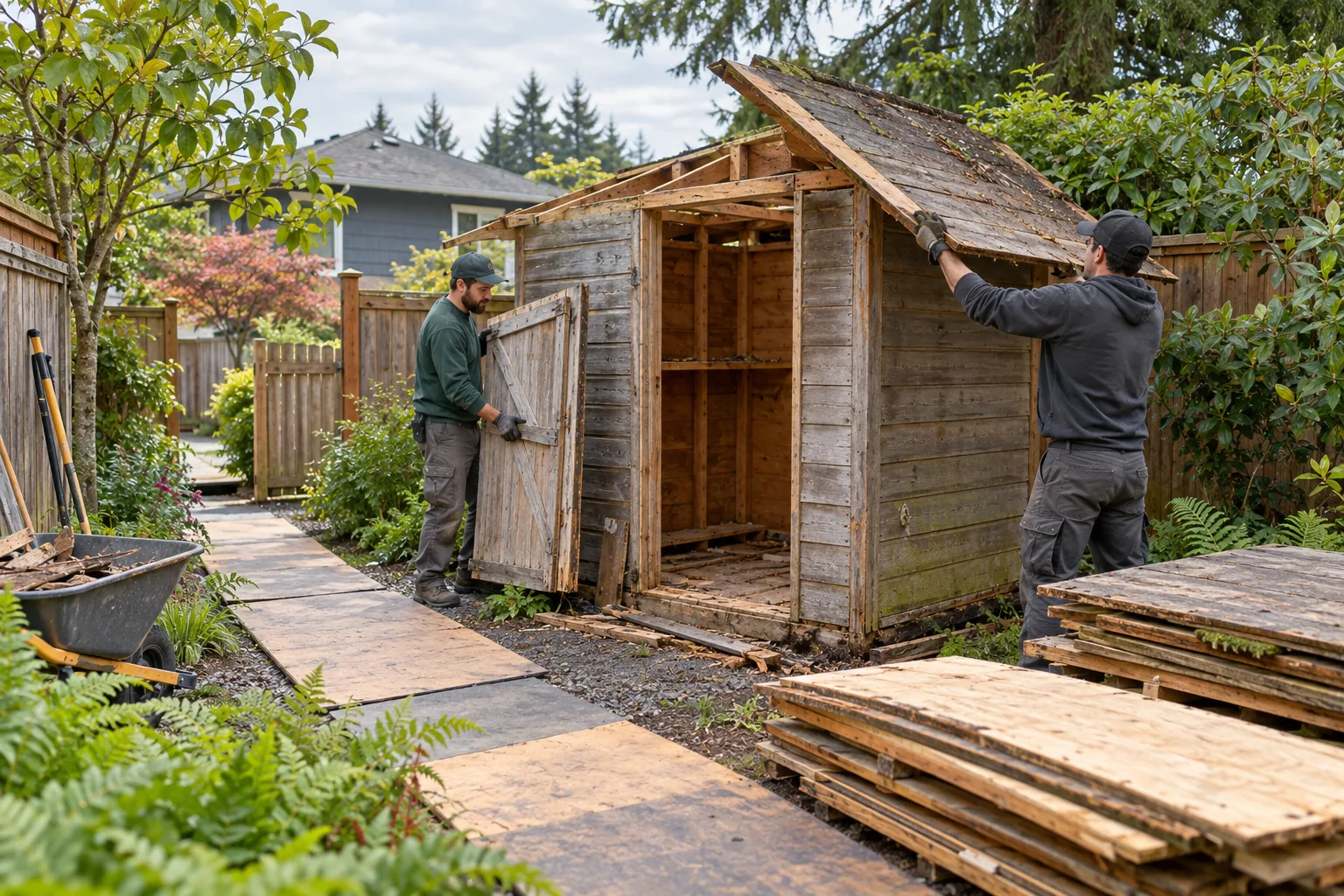
What this scope can cover
- Empty wood or metal sheds within confirmed scope
- Doors, shelving, siding, and roof panels
- Ordinary nonhazardous contents listed in advance
- Loading and cleanup of agreed debris
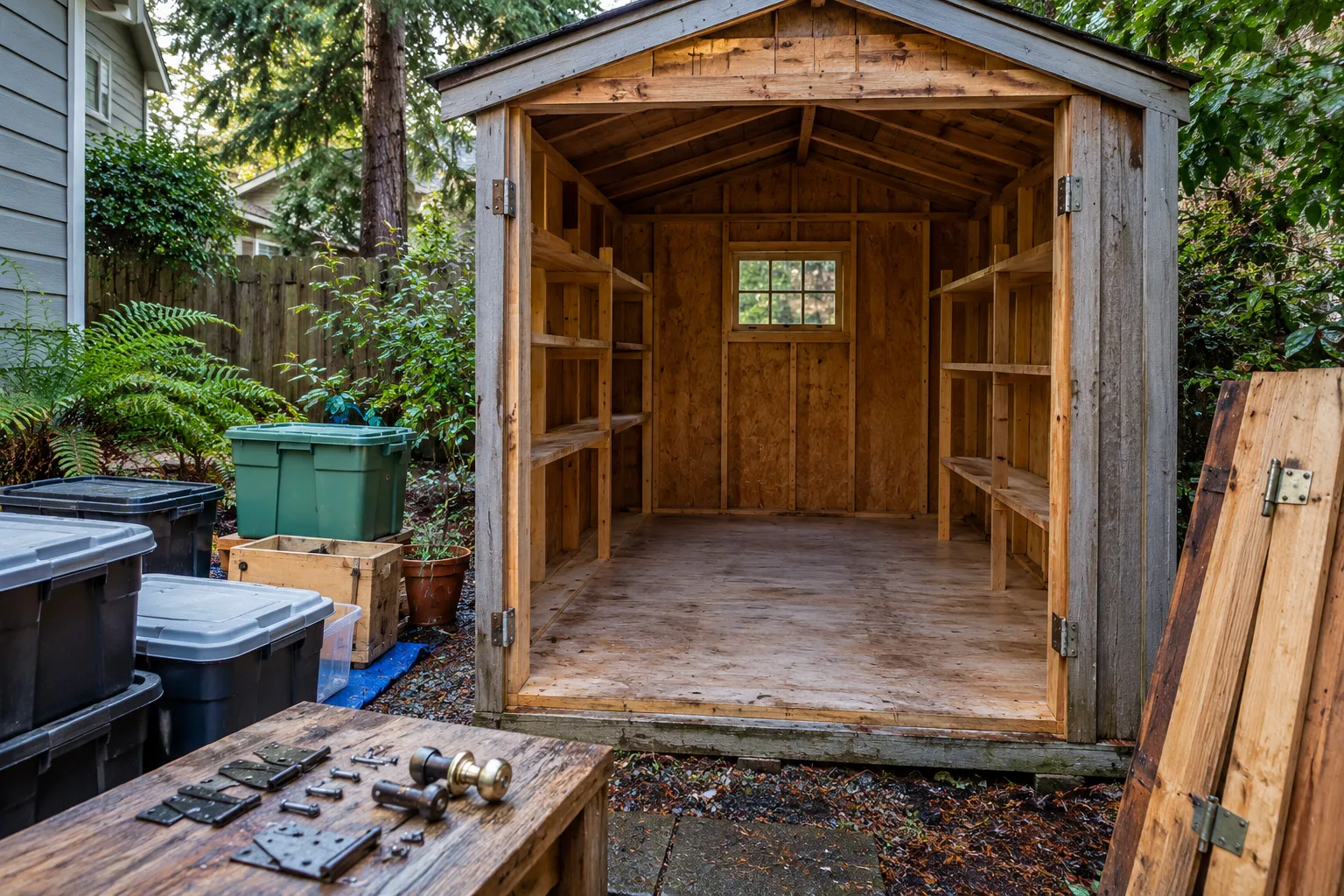
Prepare the site without creating a second project.
Share the current condition and leave heavy or unstable pieces in place. The goal is a useful assessment, not unpaid demolition before the estimate.
- 1Empty the shed and separate items that stay.
- 2Flag paint, fuel, pesticides, batteries, and other hazardous products.
- 3Confirm electrical service is disconnected by a qualified person.
- 4Photograph the foundation, back wall, and route to the truck.
What shapes the estimate
Photos help with early planning. The final scope depends on the actual materials, access, and work agreed at the property.
- Shed size and material
- Roof and wall condition
- Foundation, anchors, and attached utilities
- Distance to the loading point
- Contents included in the removal
Shed Removal questions
See all FAQsShould the shed be empty?
Yes. Emptying it lets the structure, anchors, and floor be assessed and keeps household hazardous products out of ordinary debris.
Is the concrete slab included?
A slab is a separate, dense-material scope. Include clear photos and dimensions if you want it assessed.
Can plants beside the shed stay?
Point out landscaping that must be protected. The available working space and panel-removal path affect the plan.
Shed Removal Preparation Checklist
A room-by-room approach to emptying a shed, flagging utilities, and showing the foundation and access route.
Define the scope before the crew arrives.
Use the estimate checklist to capture the item, access, utilities, and finish line.